KitchenAid Artisan 5 Quart Troubleshooting: Not Turning On – Causes and Fixes
The KitchenAid Artisan 5 Quart stand mixer is a kitchen workhorse, but when it refuses to power up, it can halt meal prep entirely. This guide dives into the most common reasons the mixer won’t turn on, from simple user errors to internal electrical faults. By following these troubleshooting steps, owners can often diagnose and resolve the issue without needing a service call.
Why Is the Mixer Completely Dead with No Lights or Sound?
When the KitchenAid Artisan 5 Quart shows no sign of life—no LED indicator, no motor hum, no beater movement—the problem is almost certainly a loss of power to the unit. Start with the most basic checks before assuming a major internal failure.
- Check the power outlet: Plug another appliance, like a toaster or lamp, into the same outlet. If that device doesn’t work, the issue is in your home’s circuit breaker or outlet. Reset any tripped GFCI outlets in the kitchen.
- Inspect the power cord: The Artisan 5 Quart’s cord can be pinched or cut under the counter edge. For models with a detachable cord (particularly newer units), ensure both ends are fully seated. A loose connection on the mixer’s rear port is a common culprit.
- Test with a known good cord: If you have access to a compatible KitchenAid cord, swap it. If the mixer powers on, replace the original cord. Replacement cords cost around $15 to $25.
If the outlet is live and the cord is intact, the next suspect is the internal fuse or thermal protector. The Artisan 5 Quart uses a resettable thermal cut-off (TCO) inside the mixer head. If the mixer overheated from extended use (e.g., kneading heavy dough for over 10 minutes), the TCO may have tripped. Unplug the mixer, let it cool for 30 minutes, then plug it back in. If it works, use shorter mixing cycles in the future.
Does the Motor Hum but the Beater Won’t Turn?
A humming sound without rotation indicates that the motor is receiving power but the mechanical drive train is stuck or disengaged. This is less common than a dead unit but equally frustrating. The root cause is often a jammed gear or a failed motor coupling.
Common causes for a humming, non-spinning mixer:
| Issue | Symptom | Severity Level | Estimated Cost to Fix (USD) |
|---|---|---|---|
| Burned-out gear (e.g., worm gear) | Loud hum, no motion, burning smell | High | $80–$120 |
| Stuck beater or bowl lift | Hum, beater won’t rotate but bowl moves | Low | $0 (DIY fix) |
| Failed motor capacitor | Hum, intermittent rotation, no start | Moderate | $15–$30 |
| Drive assembly jam (e.g., debris) | Hum, no rotation, slight grinding | Moderate | $50–$80 |
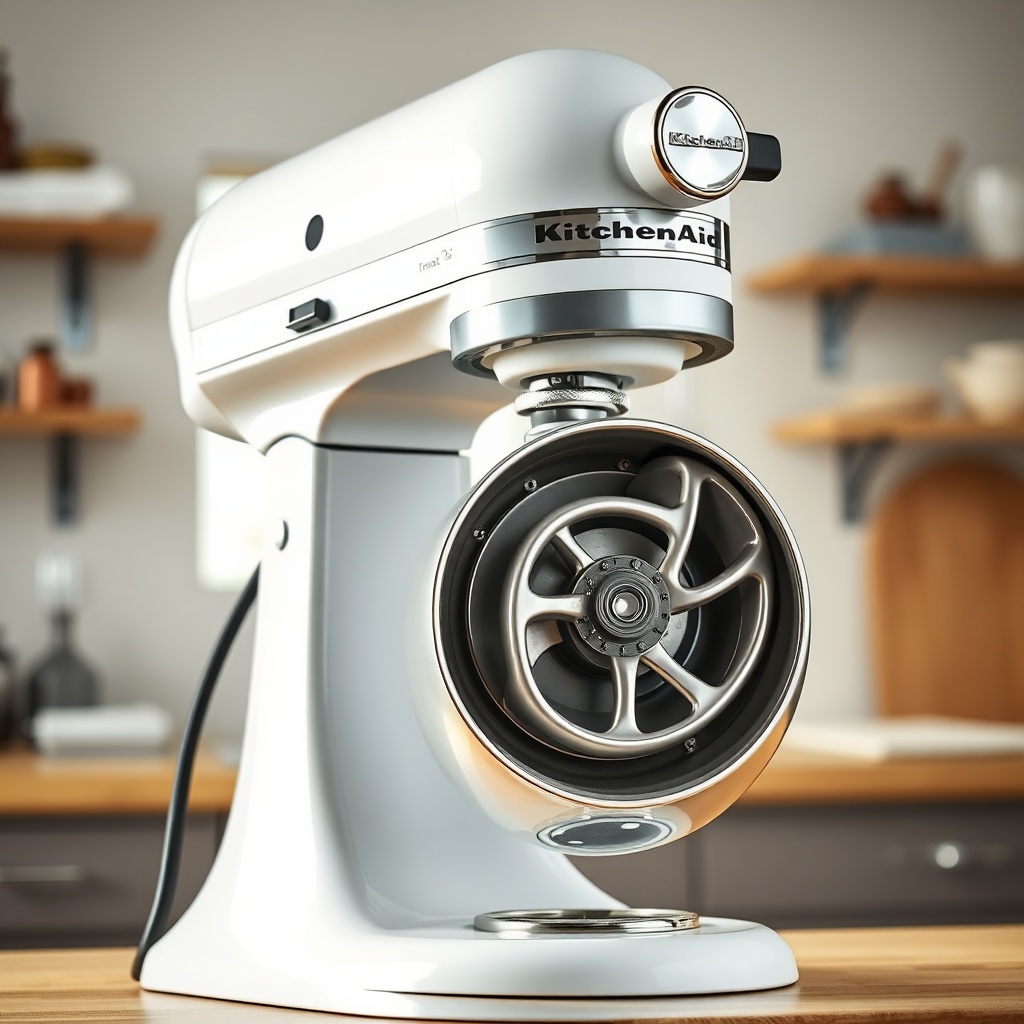
First, remove the bowl and beater. If the mixer head can tilt easily, manually rotate the beater shaft with your hand. If it’s stiff or won’t turn, the worm gear (a nylon component designed to fail first) is likely stripped. Replacing the worm gear requires disassembling the mixer head and is best done by a technician, costing roughly $80 to $120 in parts and labor. If the shaft spins freely, check the bowl lift mechanism: sometimes the bowl is not seated correctly, preventing the beater from engaging.
What If the Mixer Turns On but Shuts Off After a Few Minutes?
Intermittent operation—where the mixer runs for 1–5 minutes and then stops—is a classic sign of thermal overload. The Artisan 5 Quart has a built-in thermal protector that cuts power when the motor gets too hot. This is a safety feature, not a defect, but repeated tripping can indicate a deeper problem.
- Overwork from heavy dough: Kneading stiff bread or pasta dough for more than 10 minutes at speed 2 can overheat the motor. Let the mixer rest for 20 minutes after each heavy session.
- Low voltage supply: If the mixer is used on a long extension cord (especially 14-gauge or smaller), voltage drop can cause the motor to overheat more quickly. Always plug directly into a wall outlet.
- Dirty motor vents: Over time, flour and dust block the cooling vents on the mixer head. Unplug the mixer and vacuum the vents with a brush attachment. This simple maintenance can restore normal cooling.
If the mixer still shuts off after cooling and vent cleaning, the thermal protector itself may be failing internally. This component is soldered to the motor windings and replacement requires expert repair. Costs typically range from $60 to $100 for a technician to replace it.
Are the Speed Settings Not Working Correctly?
If the mixer powers on but the speed control lever doesn’t change the beat speed—staying on high or not engaging at all—the issue lies in the speed control board or the motor brushes. The Artisan 5 Quart uses a mechanical speed control lever connected to a variable resistor (potentiometer). Over years of use, this component can wear out.
Troubleshooting speed control problems:
- Check if the speed lever moves freely. Sometimes food debris or hardened grease jams the mechanism. Clean around the lever with a damp cloth.
- If the mixer runs only at maximum speed, the speed control board may need replacement. This part costs about $25 to $45 and is available from KitchenAid parts suppliers.
- Worn carbon motor brushes can also cause erratic speed. Brushes are wear items and should be inspected every 2-3 years. Replacement brushes cost around $10 to $15 per pair.
For models with electronic speed control (some newer variants), a malfunctioning control board might require firmware update or full board swap. This is less common but should be diagnosed by a service center if basic cleaning doesn’t fix it.
Why Does the Mixer Make a Grinding or Clicking Noise While Running?
Abnormal noises like grinding, clicking, or rattling when the mixer runs indicate mechanical issues. Unlike the silent hum of a healthy motor, these sounds mean something is loose, worn, or broken inside the transmission.
- Grinding noise: This almost always points to a worn-out worm gear. The nylon gear is designed to be sacrificial, and when it strips, the metal drive gear grinds against it. Stop using the mixer immediately to avoid damaging the motor or housing.
- Clicking noise: Often a sign of a broken or loose beater shaft retaining clip. The beater may wobble slightly, causing intermittent contact with the bowl. Inspect the shaft and replace the retaining ring (under $5).
- Rattling noise: Loose screws on the mixer head cover or the bowl lift mechanism. Check all external screws and tighten them with a screwdriver. If the noise persists, internal fasteners may have come loose.
To confirm a gear issue, unplug the mixer and tilt the head back. Manually turn the beater shaft by hand. If it turns with a crunchy, gritty sensation, the worm gear is damaged. Replacement involves disassembling the head, which is best left to a professional. Estimated repair cost: $100-$150 for parts and labor, depending on your location.
What If the Bowl Won’t Lock Into Place?
A properly locked bowl is critical for safe mixing. If the bowl on your KitchenAid Artisan 5 Quart won’t seat correctly or the locking mechanism (for tilt-head models) is stuck, the mixer may not operate due to a safety interlock. Some models disable the motor if the bowl is not fully secured.
Solutions for bowl lock issues:
- Check the bowl rim for dents. Even a small dent can prevent a proper seal. If dented, replace the bowl (cost: $30-$60).
- Inspect the locking lever on the tilt-head arm. It may be bent or broken. A replacement locking assembly costs around $15 to $25.
- For bowl-lift models (the Artisan 5 Quart is a tilt-head design, but some near-identical units vary), ensure the lift handle is fully raised. If it’s halfway, the bowl won’t engage.
Sometimes, a simple cleaning of the bowl rim and the mixer’s bowl attachment hub removes grease buildup that prevents a good lock. Use warm soapy water and a soft cloth. If the locking latch moves stiffly, lubricate with food-grade mineral oil applied sparingly to the pivot points.
What Owners Say
Owners of the KitchenAid Artisan 5 Quart frequently praise its robust build and consistent performance for everyday baking. Many report that the mixer handles medium doughs, like cookie dough and cake batters, with ease. However, common complaints center on heavy kneading—users note that the motor struggles with stiff bread dough after 10 minutes, leading to overheating shutdowns. Several users recommend adding a spring-loaded whisk or dough hook upgrade to improve performance. On forums, owners emphasize the importance of regular vent cleaning and using short mixing cycles to extend the mixer’s life. Overall, the Artisan 5 Quart is seen as a reliable daily tool, with most issues being preventable through proper usage and minor maintenance.
Frequently Asked Questions
Q: Can I fix a KitchenAid Artisan that won’t turn on myself?
A: Yes, start by checking the power cord and outlet. If those are fine, try resetting the thermal protector by letting the mixer cool for 30 minutes. If it still doesn’t work, you may need to replace the fuse or contact a technician.
Q: How do I reset my KitchenAid Artisan after it overheats?
A: Unplug the mixer and let it rest for at least 30 minutes. Plug it back in—the thermal protector will automatically reset once the motor cools. Avoid running heavy dough for more than 10 minutes at a time.
Q: Why does my Artisan 5 Quart make a burning smell?
A: A burning smell usually indicates a burned-out worm gear or overheated motor windings. Stop use immediately, check the beater shaft for resistance, and inspect for visible smoke. This typically requires professional repair.
Q: How often should I replace the carbon brushes on my Artisan?
A: Every 2–3 years, depending on usage. Signs of worn brushes include intermittent speed, sparking at the motor, or a drop in power. Replace them in pairs for $10–$15.
Q: Can I use an extension cord with my KitchenAid Artisan?
A: It’s not recommended. Use a heavy-duty cord (12-gauge or thicker) for short distances if absolutely necessary. Thin cords reduce voltage and can cause overheating. Always prefer a direct wall outlet.
Q: Is the KitchenAid Artisan 5 Quart worth repairing?
A: Yes, for most issues under $150. The mixer’s parts are widely available, and repair costs are usually lower than buying a new unit ($400–$500). However, if the motor is burned out, replacement cost may exceed the value of an older mixer.